



Medical Weight Loss
How modern weight loss medications work with your body , not against it.
Medical weight loss works by addressing the biology of appetite and metabolism, not willpower alone. The medications below act on natural hormone pathways that regulate hunger, fullness, and how your body processes food.
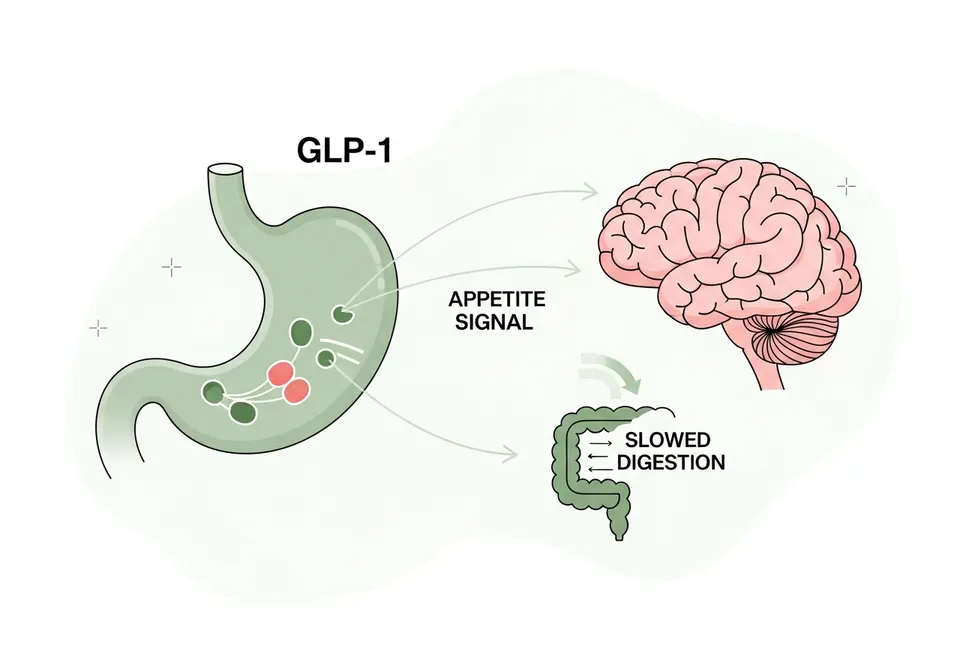
How these medications work in your body
Calming appetite signals
GLP-1 medications (semaglutide, tirzepatide) mimic a natural gut hormone that tells your brain you are satisfied , so smaller portions feel like enough.
Slowing digestion
They also slow how quickly food leaves your stomach, keeping you fuller for longer after meals and smoothing out blood sugar spikes.
Supporting metabolism
Together these effects support how your body uses energy, complementing the diet and lifestyle changes that make results last.
Dosing Formats & Strengths
The featured medications in this category, and how each one is taken.

Semaglutide
A GLP-1 receptor agonist: mimics the fullness hormone GLP-1 to reduce appetite and slow stomach emptying.
- Format
- A once-weekly subcutaneous injection using a small, fine needle. Most patients find it quick and nearly painless.
- Strengths
- Dosing starts low (typically 0.25 mg weekly) and steps up gradually over several months as your body adjusts , your prescriber sets your exact titration schedule.
Tirzepatide
A dual GIP/GLP-1 receptor agonist: acts on two gut-hormone pathways at once, which can produce stronger appetite and metabolic effects.
- Format
- A once-weekly subcutaneous injection, similar in routine to semaglutide.
- Strengths
- Started at a low weekly dose (typically 2.5 mg) and increased step-wise under prescriber guidance.
Medication that arrives as a powder
Some injectable medications ship as a dry powder and are mixed just before the first dose. This short video shows what that looks like. Follow the written instructions that came with your medication, and call our pharmacists with any questions.
Open the full guideYour Treatment Journey
What a typical experience looks like , timelines vary from person to person.
- Weeks 1–4
Starting low
You begin at the lowest dose so your body can adjust. Mild nausea or fullness is common and usually fades. Appetite often quiets noticeably in the first weeks.
- Weeks 4–12
Stepping up
Your dose increases gradually per your prescriber’s schedule. Steady weight change typically becomes visible , most patients see gradual, consistent progress rather than dramatic drops.
- Months 3–6
Finding your dose
You reach your maintenance dose. Appetite, portions, and weight settle into a sustainable rhythm. Labs and check-ins confirm everything is on track.
- Month 6+
Maintaining results
Treatment continues at your maintenance dose while healthy habits lock in results. Your prescriber will discuss how long therapy should continue for you.
Ready to talk to a pharmacist?
Start with a quick consultation , our pharmacists review every intake personally and answer questions 24/7.