

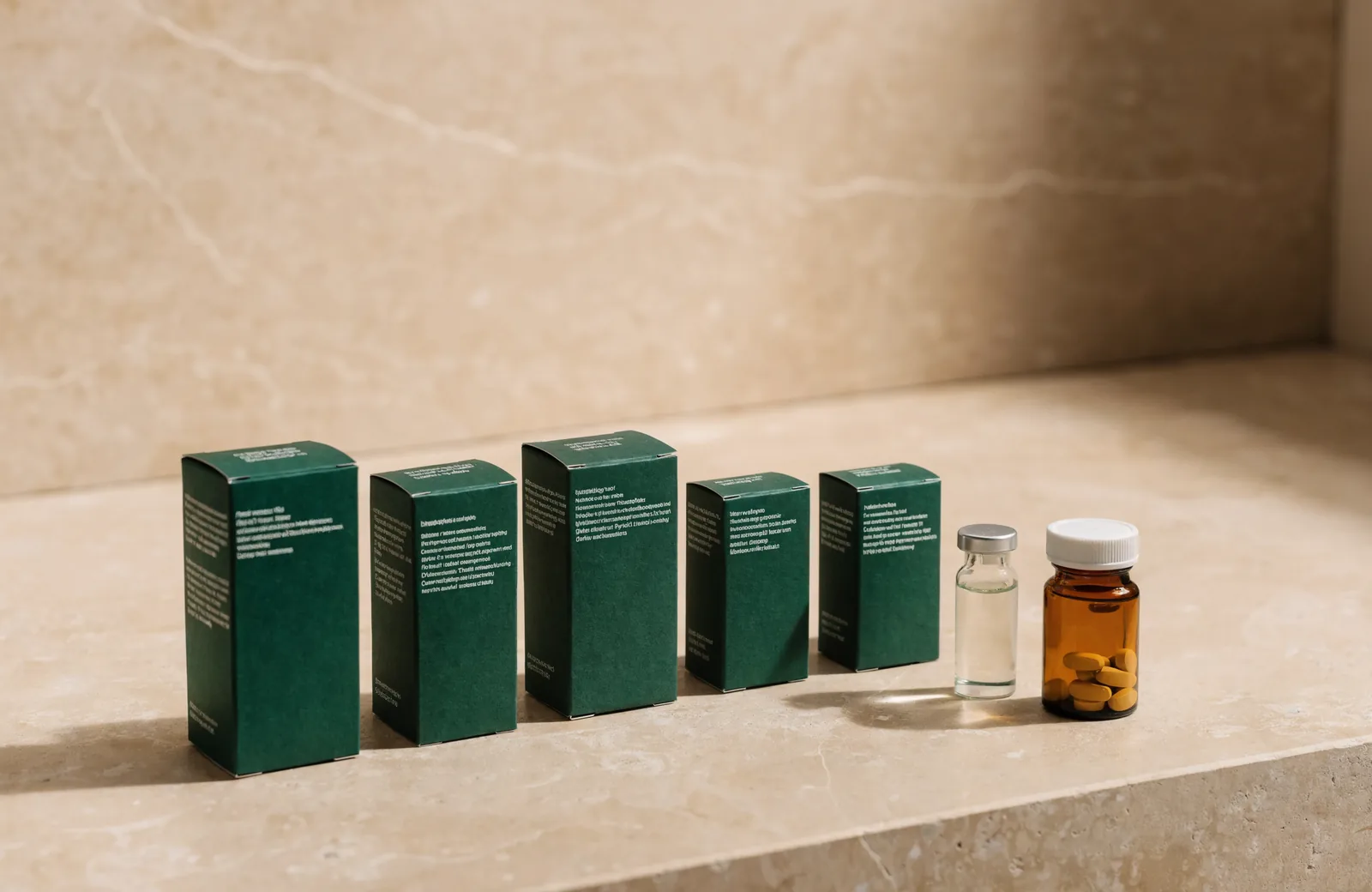

- Sterile preparations include injections, infusions, eye drops, and some irrigations and inhalation solutions.
- They're prepared with aseptic technique in ISO-classified cleanrooms with HEPA-filtered air.
- Staff must pass hand-hygiene, garbing, and aseptic-technique tests, and repeat them on a schedule.
- Every preparation gets a beyond-use date (BUD) based on its risk category and storage.
- Hazardous drugs also fall under USP <800>.
What counts as a sterile preparation
USP <797> covers compounded sterile preparations (CSPs), including:
- Injections and IV infusions
- Eye drops and other ophthalmic preparations
- Irrigations for internal body cavities
- Solutions for inhalation into the lungs
- Pellet implants
Why the bar is higher
A tablet passes through the digestive system, which has defenses of its own. An injection or eye drop doesn't, so contamination can lead to serious infection. The 2012 fungal meningitis outbreak traced to contaminated compounded injections is the reason sterile compounding standards and federal oversight were tightened.
The cleanroom
Sterile compounding happens in tightly controlled spaces, classified by how many particles the air may contain (ISO classes, where a lower number means cleaner air):
- Primary engineering control (PEC): the hood or isolator where the preparation is made, supplying ISO Class 5 air through HEPA filters.
- Buffer room: the room that houses the PEC, kept at ISO Class 7.
- Anteroom: where staff wash and put on garb before entering, kept at ISO Class 8 (or ISO 7 when it leads to a negative-pressure room for hazardous drugs).
- Pressure and airflow are controlled so air flows from cleaner areas toward less clean ones.
Lower-risk, short-dated preparations may be made in a segregated compounding area instead of a full cleanroom suite.
People, garb, and technique
People are the biggest source of contamination in a cleanroom, so <797> puts heavy emphasis on them:
- Hand hygiene and garbing: hair and shoe covers, face mask, gown, and sterile gloves, put on in a set order.
- Aseptic technique: handling components so nothing touches critical sites.
- Competency testing: gloved fingertip and thumb sampling and a media-fill test that simulates compounding. Staff pass these before working and repeat them every six months, or every three months for the highest-risk category.
Beyond-use dates and risk categories
Every sterile preparation gets a beyond-use date (BUD): the date or time after which it should not be used. The chapter sorts preparations into three categories:
| Category | Where it's made | Beyond-use date |
|---|---|---|
| Category 1 | Segregated compounding area or cleanroom | Short: up to 12 hours at room temperature or 24 hours refrigerated |
| Category 2 | Cleanroom suite | Longer, set by the chapter's tables based on how it's made, sterilized, and stored |
| Category 3 | Cleanroom suite, with added requirements | The longest, allowed only with sterility testing and more frequent monitoring |
Monitoring and release checks
- Certification: hoods and cleanrooms are certified at least every six months.
- Environmental monitoring: regular air and surface sampling for microorganisms.
- Release checks: visual inspection, label verification, and, when required, sterility and endotoxin testing before a preparation is released.
What you can do at home
- Check the label for the beyond-use date and storage instructions, and follow them.
- Keep refrigerated medications cold.
- Don't use a medication that looks cloudy or discolored, has particles, or arrives with a damaged seal. Call your pharmacy instead.
Pharmaneek and compounding
Our role
Pharmaneek does not compound medications. This guide explains how compounding pharmacies and FDA-registered outsourcing facilities are regulated. For questions about a specific prescription, contact your prescriber or dispensing pharmacy.
Contact Pharmaneek or browse our patient education resources.
Frequently asked questions
What's the difference between a beyond-use date and an expiration date?
Manufacturers assign expiration dates to FDA-approved products based on stability studies. Compounded preparations get a beyond-use date instead, set by USP rules or by stability data, which is usually shorter.
Why does my medication need to stay refrigerated?
Cold storage slows the growth of microorganisms and helps the medication stay stable until its beyond-use date. The label tells you how to store it.
What should I do if my vial looks cloudy?
Don't use it unless your label says that's expected for that medication. Call your pharmacy so a pharmacist can look into it.
Educational content only. It is not medical advice and does not replace advice from your prescriber or pharmacist. Compounded medications are not FDA-approved and require a valid prescription. Last updated October 2026.